






Trust is the product: Why Tangail’s savers choose certainty over returns
Kohinur Begum was only 15 when a local gang member abducted her from a neighborhoodnear Dhaka. They forced her into a marriage with an abusive husband withongoing mental health issues.
“Ifought for a long time, and then I just gave up and accepted my life,” she saysthrough tears. She stayed for her three children and her husband, who is nowtoo ill to harm her.
Kohinur became one of its earlymembers when the Silimpur branch of BURO Bangladesh was established in Tangail.She found an unexpected ally in the staff at BURO Bangladesh in her search forstability and independence. She worked tirelessly, as she tailored clothes,sold goods, and completed small household tasks to build her savings over time.
She shares, “At BURO, I do not needto explain my situation, and they do not ask me questions or shame me.”
Kohinur shares her story from the newly renovated roof of her home in Tangail, a sign of the stability she gained through BURO .For her, a savings account is a safe place to store money, built at a time when the world failed to protect her. In a community where past experiences of financial loss and uncertainty shape trust, BURO earned her confidence. This institution protected her dignity when she was most vulnerable.
Like many women in the community, Kohinur learned the importance of savings early in life. She watched her mother set aside money from household income for the family. Later, when she raised children without reliable support, savings became her primary way to protect their future.
“Iknew the concept of savings, and I valued it fora long time. When I was abducted and forced into marriage to someone who didnot work or support the family, I had no option. I secretly saved for mychildren and myself.”
- Kohinur Begum, Silimpur, Tangail
In Tangail, members describe trust in practical terms. It stems from interest rates, promotional offers, and the assurance that their money will be there when they need it. For many house holds living with uncertain incomes, trust comes from repeated experience with an institution that behaves predictably and stands by its members during difficult periods. Members often describe the most important feature as confidence, rather than a specific savings product. The money remains accessible, safe, and managed under clear, respectful rules.
Members repeatedly identified three features that shaped this confidence during field discussions:
- Instant visibility and access: Members trust institutions when they can withdraw up to BDT 5,000 (~USD 40) immediately during a center meeting with only a signature.
- Predictable reliability: Members consistently report that they have not faced difficulties accessing their savings from BURO branches or centers.
“I never saw anyone lose money or face problems in getting their money back,” says one woman member from the Atia Branch, whose house has been a center meeting point since 1990.
- Dignity in interaction: Members often mention respectful staff behavior as more important than interest rates. Kohinur values that BURO staff treat her with respect, which allows her to save without fear of judgment or pressure. This sense of dignity and reassurance encourages members to save regularly and rely on the institution during difficult periods.
In many financial models, locked-incapital is seen as a way to ensure stability. However, in the precariouseconomy of rural Bangladesh, restrictions create uncertainty, which leads tofear. Research shows that entrepreneurs benefitmore from flexible financial products[GA10] that allows members to withdraw their savings even while they have an activeloan.
Most other providers block access to savings or net them off against missed installments without the member’ s permission. As one member explained during the discussion, her confidence in BURO comes from the assurance that her savings remain under her control, even when she has an active loan. This flexibility is especially important in households where income is uncertain and unexpected expenses are common.
BURO ensures that members do not lose access to their deposits during difficult periods, as it allows them to withdraw their savings when needed. When people know they can withdraw money when necessary, they feel more comfortable saving larger amounts. Members often described this flexibility as a reason why they continued to keep their savings with BURO for prolonged periods.
Cognitively, we evaluate trust through contrast. Tangail’s savers carry the psychological weight of past losses, shaped by experiences in which local nongovernmental organizations(NGOs) or syndicates disappeared with their life’s savings.
Conversations during field visits often reflected memories of savings lost through informal groups or organizations. After such experiences, households became more cautious about where they placed their savings. They preferred institutions with a visible presence, long operating history, and clear rules around withdrawals.
Manoti,a participant, shares that she lost BDT 500,000 (~USD 4,000), representing a lifetime of effort. She moved her savings from a reputable bank to an organization that later disappeared. Such experiences shape how many members think about financial safety. Several participants linked this confidence to BURO’s long-term presence in the community and its continuous relationship with branch-level staff.
Trust often develops gradually through repeated experience. During field discussions, several members described how their confidence in BURO strengthened as they could withdraw savings when needed and observed that the institution remained accessible during difficult periods.
The COVID-19 pandemic revealed the extent to which members trusted BURO. Despite restrictions on movement and temporary branch closures in many places, BURO continued to allow members to withdraw their savings. In the early weeks of the pandemic, members withdrew around to test whether their savings would remain accessible. When BURO honored these withdrawals without restriction, members grew more confident. Some households later shifted additional savings to BURO as a reliable place for their money.
For members, BURO’s reliability creates a strong sense of security. Several long-term members described how it gradually came to be known locally as “BURO Bank.” They valued the ability to deposit and withdraw money through simple and reliable processes.
Members often linked this confidence to clear institutional rules and the consistent support of local field staff, who maintained regular contact with households over many years. As another member, Fulbanu Begum notes, “When income from farming is uncertain, my savings give me confidence.”
The experience of BURO’s Tangail branches suggests that savings deepened through product design and through the way institutions manage everyday access to savings. Reliable access to liquidity is an operational detail that shapes where members choose to keep their money over time.
Institutions can better understand this relationship through tracking indicators that reflect how members experience access to their savings in practice. These indicators include:
- Withdrawal friction: How long does a member take to withdraw a small amount, such as BDT 5,000 (~USD 40), during a regular center meeting?
- Early withdrawal flexibility: How often do staff discourage members from an early Deposit Pension Scheme (DPS) exit despite urgent household needs?
- Rule consistency: Do members across different branches report the same understanding of savings access and loan–savings linkages?
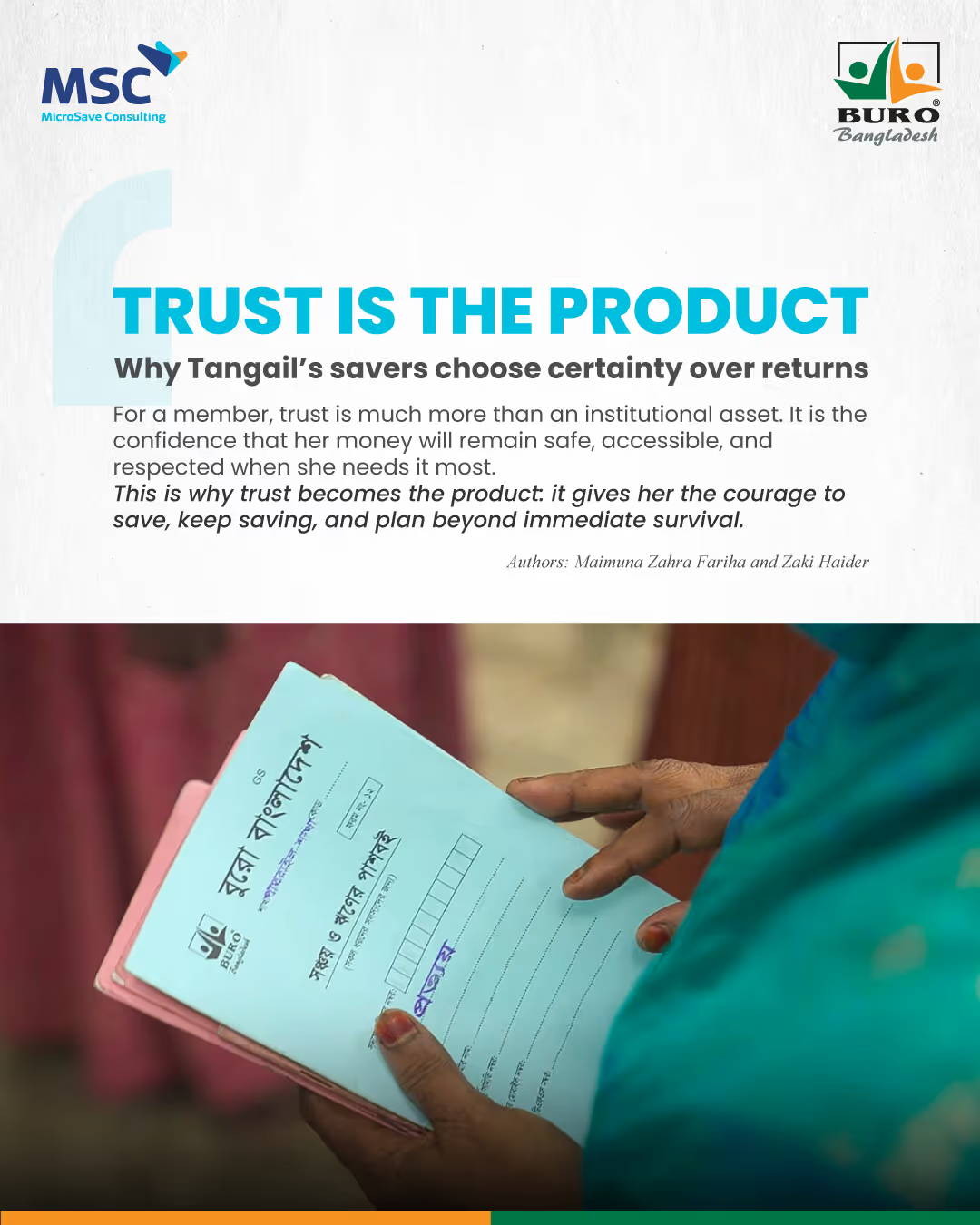
The experiences from Tangail suggest that predictable access to savings and consistent rules encourage members to deepen their relationship with the institution over time. Yet, for members, such as Kohinur, trust is much more than an institutional asset. It is the confidence that her money will remain safe, accessible, and respected when she needs it most. This is why trust becomes the product: It gives members the courage to save, continue savings, and plan beyond immediate survival.
The next blog in this series builds on this idea by exploring when saving begins to feel like freedom. It shows how women in Tangail use savings to build security, support their daughters’ futures, and gain financial confidence over time.


